
 ARTUR LIMAVPGR BIOGRAFIAVice-Presidente do XIV Governo dos Açores.Licenciado em Medicina Dentária pela Universidade do Porto, pós-graduado em Direito da Medicina pela Universidade de Coimbra e Ortodoncia pelo Centro Europeu de Ortodoncia de Madrid e pela Fundacion Gnathos. |
 RUTE DIAS GREGÓRIODRCID BIOGRAFIADiretora Regional da Ciência, Inovação e Desenvolvimento.
|
 Alexandre AlmeidaTechnopolis Group Portugal BIOGRAFIAAlexandre Almeida was born in Aveiro, Portugal, in 1981. He holds a Master’s degree in Economics and a PhD in Innovation Economics. He also completed a programme at Aalto University in Design Thinking and is about to begin his postdoctoral research at Fundação Getúlio Vargas (Brazil) on innovation policy transmission mechanisms. From 2007 to 2009, he served as Deputy Coordinator of a research team at the University of Porto, responsible for designing the Innovation Action Plan, the Industrial Areas Action Plan, and the Fashion Industries Action Plan for the Norte region. Between 2009 and 2012, Alexandre worked for the management authority of the Norte region’s Operational Programme 2007-2013 as Head Advisor to the Executive Committee on innovation and competitiveness policies. During this time, he led the evaluation teams for the Norte OP in the areas of S&T policies, SMEs, and energy. From 2013 to 2015, Alexandre served as Head Advisor for CCDR-N, where he was responsible for the Smart Specialisation Strategy and the cross-border Smart Specialisation Strategy for Norte-Galiza. Additionally, he oversaw the design of the competitiveness axis of the Operational Programme for the period 2014-2020. During this period, he was also the rapporteur for the Smart Specialisation Strategy of Alentejo (CCDR-A) and acted as an external expert for the Smart Specialisation Strategy of Algarve (CCDR-Alg). From 2016 to 2023, Alexandre worked for the National Innovation Agency, coordinating the National Smart Specialisation Strategy, the IPCEI, and European projects on financial instruments. He was also responsible for policy recommendations concerning financial schemes to support SMEs. More recently, he has served as an expert in evaluating national and regional innovation systems in Argentina and Chile. In the past, Alexandre has advised the executive boards of general hospitals (Gaia, São João, and Guimarães) and worked in the cosmetics and medical devices industry. |
 Sarah Mifsud AttardXjenza Malta BIOGRAFIASarah Mifsud Attard is a Senior Executive at Xjenza Malta, supporting the implementation of Malta’s Smart Specialisation Strategy (RIS3). She plays a key role in providing technical expertise for Malta’s RIS3 2021–2027 across priority sectors which include digital technologies, sustainable resources, health, and smart manufacturing. Her work centres on strengthening innovation ecosystems, building policy intelligence, and enabling interregional collaboration.With a background in Medical Anthropology, she brings an interdisciplinary perspective to innovation policy, connecting research, society, and economic development. She is particularly passionate about how small regions and Member States can use S3 to punch above their weight, turning strategic focus into tangible, sustainable growth. |
 MANUEL LARANJAISEG – Lisbon School of Economics and Management BIOGRAFIAEconomic and policy analyst with over a decade of experience at the science–policy interface, specialising in regional, urban, and territorial development within the European context. My work focuses on EU Cohesion Policy, mission-oriented innovation, and multi-level governance, combining advanced quantitative territorial analysis with policy evaluation and institutional assessment.I have contributed extensively to policy-oriented research and programme evaluation for the European Commission, particularly on ERDF and Cohesion Fund interventions, supporting evidence-based decision-making and territorial strategies. My academic background in economic geography and policy analysis informs my research on how regional actors respond to global challenges, including climate change, through place-based and cross-border policy frameworks.I have worked across academia and consultancy, participating in Horizon 2020 and Interreg projects, and producing policy-relevant outputs published in leading international journals
|
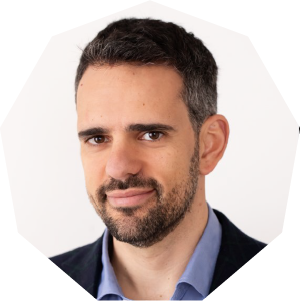 FRANCESCO CAPPELLANOChristian-Albrecht University of Kiel BIOGRAFIAEconomic and policy analyst with over a decade of experience at the science–policy interface, specialising in regional, urban, and territorial development within the European context. His work focuses on EU Cohesion Policy, mission-oriented innovation, and multi-level governance, combining advanced quantitative territorial analysis with policy evaluation and institutional assessment.Has contributed extensively to policy-oriented research and programme evaluation for the European Commission, particularly on ERDF and Cohesion Fund interventions, supporting evidence-based decision-making and territorial strategies. An academic background in economic geography and policy analysis has informed hisresearch on how regional actors respond to global challenges, including climate change, through place-based and cross-border policy frameworks.Has worked across academia and consultancy, participating in Horizon 2020 and Interreg projects, and producing policy-relevant outputs published in leading international journals |
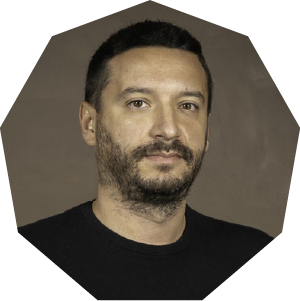 DUARTE PIMENTELTERINOV BIOGRAFIADuarte Pimentel holds a PhD in Economic and Business Sciences, with a specialization in Management. He serves as Executive Director and Member of the Board of Directors of TERINOV – Science and Technology Park of Terceira Island, and is an Assistant Professor at ISPA – University Institute. He also serves as Vice-President of the General Assembly of APPE – Portuguese Association of Business Parks, Permanent Member of the National Strategic Council of Startup Portugal, Member of the Regional Council for Smart Specialization, Member of the Innovation and Technology Sectoral Committee of the Angra do Heroísmo Chamber of Commerce and Industry, Member of the Monitoring Committee of the Açores 2030 Program, Member of the Steering Committee of the School of Technologies and Administration of the University of the Azores, and Member of the Commission responsible for the preparation of the Strategic Plan of the University of the Azores. He is the author and co-author of more than twenty scientific articles and book chapters, and has supervised and co-supervised over twenty Master’s dissertations and PhD theses in the fields of management and organizational behavior. |
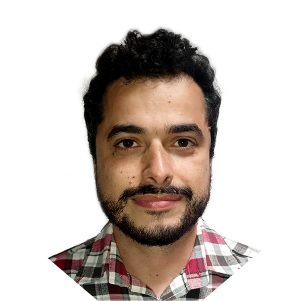 JORGE FRIASCBA – UAc BIOGRAFIAJorge Miguel Vieira de Frias é investigador de pós-doutoramento no Centro de Biotecnologia dos Açores (CBA), da Universidade dos Açores. É licenciado em Ciências Biológicas e da Saúde e mestre em Ciências Biomédicas pela mesma instituição, onde também concluiu o seu doutoramento em Biologia em 2023, com foco no desenvolvimento de novas formulações de inseticidas para a proteção vegetal.A sua investigação envolveu colaborações com diferentes projetos de investigação regionais e europeus, incluindo Biocomes, NanoNema, Metamine e IPM-Popillia. Atualmente, é o investigador principal do projeto PacBioPest.
|
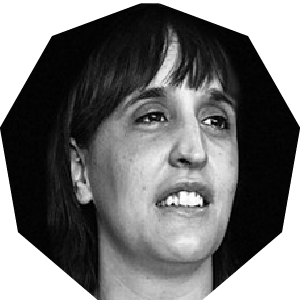 SUSANA RIBEIROIITAA – UAc BIOGRAFIAInvestigadora no Instituto de Investigação e Tecnologias Agrárias e do Ambiente (IITAA) da Universidade dos Açores. É licenciada em Bioquímica e mestre na mesma área pela Universidade da Beira Interior (UBI), tendo obtido o doutoramento em Ciências Agrárias, especialidade de Tecnologia Alimentar, pela Universidade dos Açores. A sua atividade científica centra-se nas áreas alimentar e da saúde, nomeadamente no estudo da microbiota intestinal, dos probióticos e no desenvolvimento de alimentos funcionais. A sua principal área de especialização incide sobre compostos antimicrobianos, em particular bacteriocinas, abrangendo o seu isolamento, caracterização e aplicação em diferentes contextos. |
 GONÇALO ROSAGBA/cE3c – UAc BIOGRAFIAGonçalo P. Rosa é investigador no Grupo de Biodiversidade dos Açores (GBA/cE3c), na área da química de produtos naturais. O seu trabalho centra-se na valorização de recursos naturais, com especial enfoque em plantas e macroalgas dos Açores, recorrendo a metodologias de extração sustentável e ao desenvolvimento de abordagens inovadoras para a identificação de compostos bioativos, incluindo técnicas de ligand fishing com enzimas imobilizadas. A sua investigação tem como objetivo a descoberta de moléculas com potencial aplicação nas áreas farmacêutica e cosmética. |
 CLARA LOUREIROOKEANOS – UAc BIOGRAFIAClara holds a PhD in Ocean Sciences (2022) from the University of the Azores, specializing in microbial oceanography, with a strong research focus on the biophysical processes shaping marine microbial communities across spatial and temporal scales in the Azores and broader Atlantic Ocean. Her work has particularly explored bacterioplankton structure and dynamics, contributing to the first characterization of microbial plankton communities across the Azorean region and their comparison with North–South Atlantic patterns.
|
 CÉLIA GOMESIITAA – UAc BIOGRAFIACélia Silva é licenciada em Bioquímica pela Faculdade de Ciências da Universidade de Lisboa e doutorada pela Universidade de Reading (Reino Unido). É atualmente professora associada com agregação na Universidade dos Açores, onde dirige o curso de mestrado em Tecnologia e Segurança Alimentar. É também diretora do Instituto de Investigação e Tecnologia Agrária e do Ambiente (IITAA).Participa ativamente na comunidade científica, tendo orientado vários alunos de mestrado, doutoramento e pós-doutoramento, sendo editora de várias revistas internacionais e estado envolvida em diversos projetos de investigação. Publicou >50 artigos científicos, com >2600 citações e inclusão no top 2% dos cientistas mais influentes (ranking de Stanford, 2023–2025). A sua investigação foca-se sobretudo em produtos lácteos (queijos açorianos), bactérias do ácido láctico, probióticos e bacteriocinas, valorização de subprodutos e ingredientes funcionais, bem como na relação entre a microbiota intestinal e saúde. |
 GUI MENEZESOKEANOS – UAc BIOGRAFIAGui M. Menezes é Investigador Principal da Universidade dos Açores, sendo diretor do Instituto de Investigação em Ciências do Mar – OKEANOS desde 2021. As suas principais áreas de investigação são a ecologia marinha, as pescas, a biologia e ecologia dos peixes demersais e de profundidade e o desenvolvimento de tecnologias para a obtenção de dados da pesca. Participou em inúmeros projetos e cruzeiros científicos no Atlântico, mergulhou por duas vezes a mais de 800 metros no submarino LULA, é autor, ou coautor de cerca de 90 artigos científicos, vários capítulos de livros e coautor de uma patente. Entre 2016 e 2020 exerceu o cargo de Secretário Regional do Mar, Ciência e Tecnologia no XII Governo Regional dos Açores. |
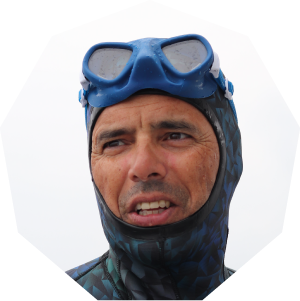 JORGE FONTESOKEANOS – UAc BIOGRAFIARaised in the small island of Faial, right in the center of the Atlantic, João Fontes as lived the ocean more that he has researched it. Growing in the Azores shaped its love for marine living, which he rid through technological innovation and cutting-edge marine research.
|
 CLÁUDIA OLIVEIRAOKEANOS – UAc BIOGRAFIACláudia Oliveira has a PhD in Marine Sciences, Marine Ecology, by the University of the Azores. She has multiple years of professional experience, mostly on cetacean bioacoustics and behavioural ecology. At OKEANOS (University of the Azores), she has been developing her research on the acoustic and movement behaviour of sperm whales, based on her extensive experience both in fieldwork and in data processing and analysis of animal-borne tag data. Cláudia continues working with photo-identification and biopsy data to investigate sperm whale movements and social structure, mostly in lower latitudes. In addition, she is the leader/regional-leader of two projects, the first that intends to assess the feasibility of detecting high frequency signals with the Distributed Acoustic Sensing technology, and the second that aims to compare the marine soundscapes of different European locations and to mitigate the impacts of human activities on cetacean welfare. |
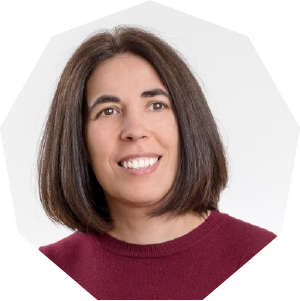 ROSALINA GABRIELGBA/cE3c – UAc BIOGRAFIALicenciada em Biologia pela Universidade de Lisboa em 1986 e doutorada em Ecologia Vegetal pela Universidade de Londres (Imperial College) em 2000. Professora associada da Faculdade de Ciências Agrárias e do Ambiente da Universidade dos Açores na Ilha Terceira. Dedica-se ao estudo da biodiversidade, biogeografia e conservação de briófitos, que incluem os musgos e outras plantas ancestrais e à investigação em educação ambiental, procurando perceber como podemos estimular a ligação e a exposição das pessoas à natureza. Autora de mais de 100 artigos em revistas da especialidade e autora/co-autora de mais de uma dezena de livros. Participou como investigadora ou coordenadora em 15 projectos com financiamento internacional, e mais de 50 com financiamentos nacionais/regionais. Presentemente está a coordenar o projecto “BioMUST4all – Experienciar a biodiversidade nos Açores de forma inovadora e inclusiva”. Desde Junho de 2023 é Directora do Grupo da Biodiversidade dos Açores, que está filiado no Centro de Ecologia, Evolução e Alterações Ambientais (GBA-CE3C). |
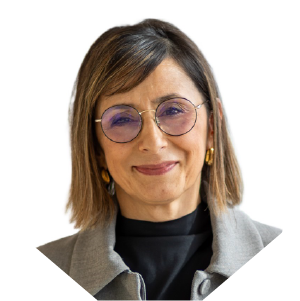 MANUELA LIMAFCT – UAc BIOGRAFIAA Doutora Manuela Lima é Professora Catedrática de Genética Humana na Universidade dos Açores (UAc) e membro integrado do Instituto de Ciências Biomédicas Abel Salazar (Porto), onde tem vindo a investigar doenças neurodegenerativas hereditárias. É atualmente membro do Conselho Executivo da Rede ESMI, uma iniciativa internacional para preparar ensaios clínicos emergentes para a doença de Machado-Joseph. Tem mais de 100 trabalhos publicados em diversos domínios da Genética Humana (Genética Populacional, Evolutiva e Clínica), resultantes de trabalho desenvolvido no âmbito de projetos de investigação competitivos, vários dos quais na condição de Investigadora Principal. Responsável, na UAc, pela criação de diversos cursos, tanto ao nível de graduações como de pós-graduações, em que se destaca o Doutoramento em Biologia. Leciona no âmbito do Ciclo Básico de Medicina, em consórcio com Coimbra, nas disciplinas de Genética 1 e Genética 2, sendo regente e lecionando ainda várias unidades curriculares desta área na Licenciatura em Biologia, no Mestrado em Ciências Biomédicas e no Doutoramento em Biologia. Já orientou mais de 40 projetos de Mestrado, Doutoramento e Pós-doutoramento. |
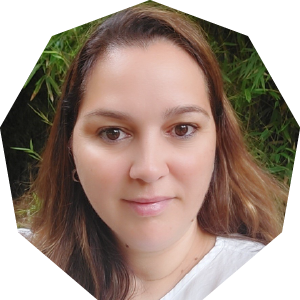 DIANA LINHARESIVAR – UAc BIOGRAFIADiana Linhares é Doutorada em Biologia, ramo da Biomedicina, e Mestre em Ciências Biomédicas pela Universidade dos Açores. É investigadora na Unidade de Geomedicina do IVAR, onde desenvolve investigação nas áreas da saúde pública, epidemiologia ambiental e ecotoxicologia, com enfoque na interação entre ambiente e saúde em contextos vulcânicos.Atualmente, lidera o projeto Hot Thermal Water: The Secrets of Volcanic Water, que visa explorar e validar cientificamente o potencial das águas termais de origem vulcânica nos Açores como recurso terapêutico e de bem-estar. Este projeto combina investigação avançada na área da saúde com o objetivo de desenvolver um portfólio de produtos termais certificados, cientificamente comprovados, que promovam a saúde e o bem-estar. |
 JOÃO GREGÓRIODRCID BIOGRAFIARD&I project and program manager for the Azores Regional Directorate of Science, Innovation and Development. He is a member of RIS3 Açores’ Operational Unit for management and Monitoring and is the coordinator for the “Sea and Blue Growth’s” Thematic Work Group.
|
 ANA CRISTINA MOSCATELDRCID BIOGRAFIAAna Cristina Moscatel Pereira has a PhD in Atlantic and Insular History (University of the Azores). Has a degree in History, a postgraduate specialization in Information Sciences, a Master’s degree in Insular and Atlantic History, from the University of the Azores. Was a Visiting Assistant Professor at the University of the Azores, for the scientific area of History, between 2002 and 2005 and between 2016 and 2023.
|